Drake did not "Falloff". He's Frozen in Place.
- reignitedtheseries
- May 16
- 5 min read

"43 Songs reveals something bigger than rap beef: the loneliness, resentment, and arrested development being sold to young men as depth."
by Ken Oswald "__yak" Vann, Jr.
Saturday 16 May 2026
Drake doesn’t sound heartbroken. He sounds offended that the world kept moving after he left the group chat.

I can't really speak to whether the albums are “good” in the normal review sense as much as what they reveal about the psychology of a man who got used to being the center of the industry’s orbit, then woke up one day and realized he's Uranus.
I’m going to be honest: I did not have time to sit through all three albums like I was being paid, I have a life and family. Three full projects — Iceman, Maid of Honour, and Habibti — dropped at once, 43 songs total, which is already part of the problem. That’s not an album rollout. That’s a hostage situation with 808s. A Manifesto of Petty, if you will.

People think this is a comeback strategy, but it’s actually an anxiety strategy.
Dropping three albums at the same time is terrible business unless the goal is to flood the zone, game attention, satisfy a label obligation, or make the sheer size of the release feel like dominance. But creatively? It cannibalizes itself. You are making your own audience choose which version of you matters. Rap Drake, club Drake, wounded R&B Drake — all fighting each other for oxygen on the same day. That’s not range. That’s Donald Trump opening three casinos on the same Atlantic City strip and acting shocked when they start eating each other alive.
That’s the part people miss. The volume is not confidence. The volume is compensation.
Beneath all of it, I've always seen Drake as the kid on the block who had the newest toys.
You know that kid. The one with the PlayStation before everybody else. The fresh bike. The big basement. The snacks. Everybody came over because his house had the stuff. He got used to confusing access with affection. He thought the block loved him. Really, the block loved the toys.
Then everybody grew up. Everybody got their own console. Their own house. Their own money. Their own motion. No need to pretend to laugh at UMG's spoiled brat's mean jokes.
Now he’s standing on the porch mad as hell because people don’t need to come over anymore.
That is the emotional center of this Drake era.
Not sadness. Not vulnerability. Entitlement dressed up as pain.

On “Make Them Cry,” he says some shit like, “My dad got cancer right now, we battlin’ stages,” and I’m not touching that like it’s a joke because that is real life. That is the part where a human being slips through the armor. A father’s illness will put mortality in your lap whether you’re ready for it or not—it happened to me. That kind of line has weight because it is not about charts, beef, women, or industry politics. It is about the one thing money cannot bully...time.
But the emotional problem is what happens around that pain.
Instead of grief becoming maturity, it keeps getting routed back through grievance. Betrayal. Rebuttals. Image repair. Who switched up. Who owes him loyalty. Who didn’t stand where they were supposed to stand when the room got hot. I think I heard him say some goofy shit like, “I’m in the cut just loading rebuttals,” and that line tells you exactly where his head is. Not healing, but loading. Not processing, but reloading.

That is not vulnerability. That is a man turning every wound into ammunition because sitting with the wound would require him to stop being performative and acting like he's in control.
And that is why this music hits a specific pocket of young men in the West right now.
Not because Drake is uniquely deep. Because he gives emotionally stagnant men luxury language for their own immaturity.
A lot of young men are lonely. Disconnected. Sexually anxious. Socially underdeveloped. Economically insecure. Culturally overstimulated. Constantly told they should be dominant while privately feeling disposable. They do not know how to name that without feeling weak, so they reach for the easiest script available: everybody is fake, women are ungrateful, friends are jealous, loyalty is dead, success is revenge, and accountability is something losers invented because they couldn’t afford better clothes.
Drake packages that perfectly.

He makes isolation sound expensive.
He makes emotional avoidance sound romantic.
He makes resentment sound like discernment.
He makes “I can’t maintain intimacy” sound like “people can’t handle my level.”
Nigga, please! 😅
That’s not growth. That’s arrested development with a better mix engineer.

And this is where the machine gets involved, because this is not just about one artist being in his feelings. The industry knows wounded masculinity sells. It sells podcasts. It sells gym programs. It sells crypto scams. It sells dating courses. It sells “high value man” cosplay to men who need therapy, friendship, discipline, and sunlight. Drake’s version is just more polished. Less basement webcam, more marble countertop.
That’s why I’m not interested in the social media narrative. The “who won the beef” conversation is shallow. The deeper issue is that Drake has become one of the clearest pop mirrors for a generation of men who were never taught the difference between being needed and being loved.
Being needed is transactional.
Being loved requires character.
And that is where his music keeps slipping.
Because the moment the women stop needing access, the friends stop needing proximity, the industry stops needing his feature, and the culture stops treating his mood swings like weather events, the whole mythology starts shaking. Now he has to answer a harder question: who are you when people can get toys of their own?
That question is bigger than Drake.
It is the same question hitting a lot of men who built their identity around leverage. Money, looks, access, popularity, sexual attention, professional status, clout — whatever the toy may be for them. The minute people stop needing it, they mistake independence for betrayal.
That is emotional immaturity.
And even worse, it is bad art when it never evolves.
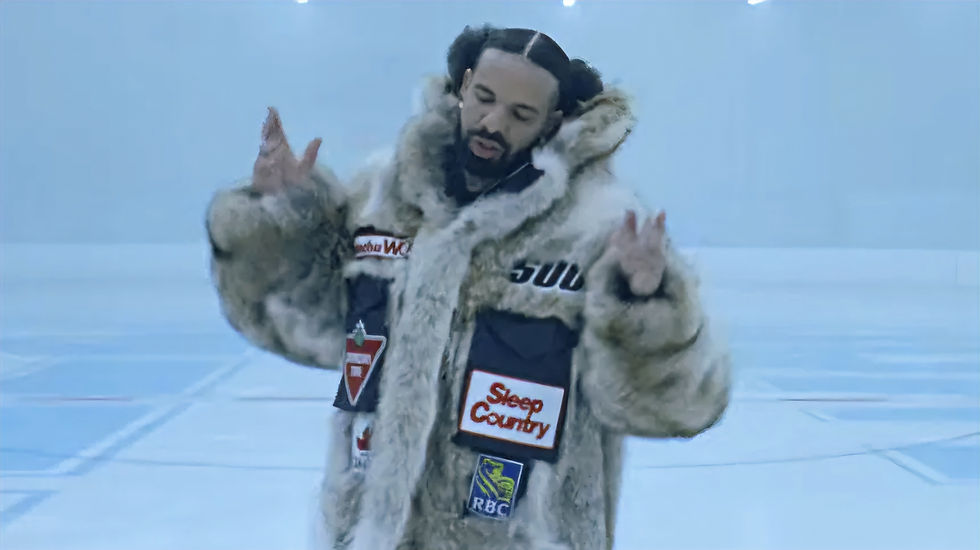
The future of Drake’s music depends on whether he can stop mistaking volume for impact and pain for depth. He didn’t need three albums; he needed one honest one. He does not need more rebuttals as much as he needs revelation. He does not need to prove he can still dominate attention—he needs to prove he can make meaning without turning every relationship into a courtroom exhibit.
Because commercially, Drake will be fine. Let’s not be stupid. He is too big to vanish. The machine still benefits from him. Streaming still benefits from bloat. The fanbase will still run numbers like unpaid interns at Republic. The Guardian already framed the triple release as bloated and overextended, and that critique matters because even massive artists can lose cultural sharpness while keeping commercial infrastructure.
That is the real danger.
Not falling off.
Becoming emotionally boring.
Drake’s biggest threat is not Kendrick, critics, Twitter, or whatever rapper people crown next week. His biggest threat is that his audience may mature past the emotional logic he keeps selling them.
Because eventually, “everybody betrayed me” stops sounding profound and starts sounding like the common denominator needs a mirror.



Comments