Jay-Z Didn’t Diss Them—He's Ending the Conversation
- reignitedtheseries
- 3 hours ago
- 4 min read

"What sounded like a freestyle was actually a structured reminder of permanence over popularity."
by Ken Oswald "__yak" Vann, Jr.
Monday 01 June 2026
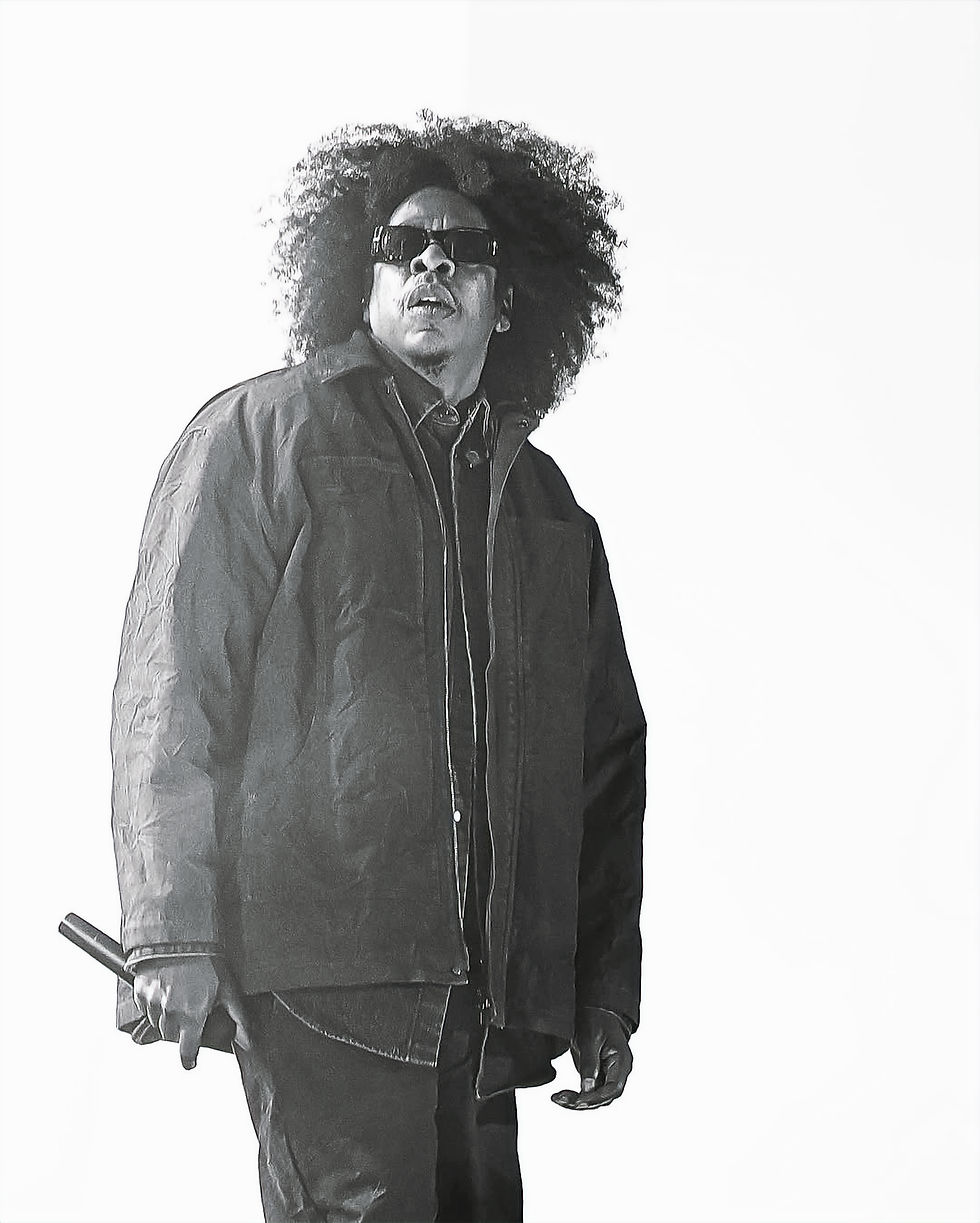
This is more than a freestyle moment. This is a narrative reallocation exercise disguised as performance art—and people are still treating it like rap when it’s really closer to institutional messaging with rhyme schemes attached.
Let me be precise about what’s happening.
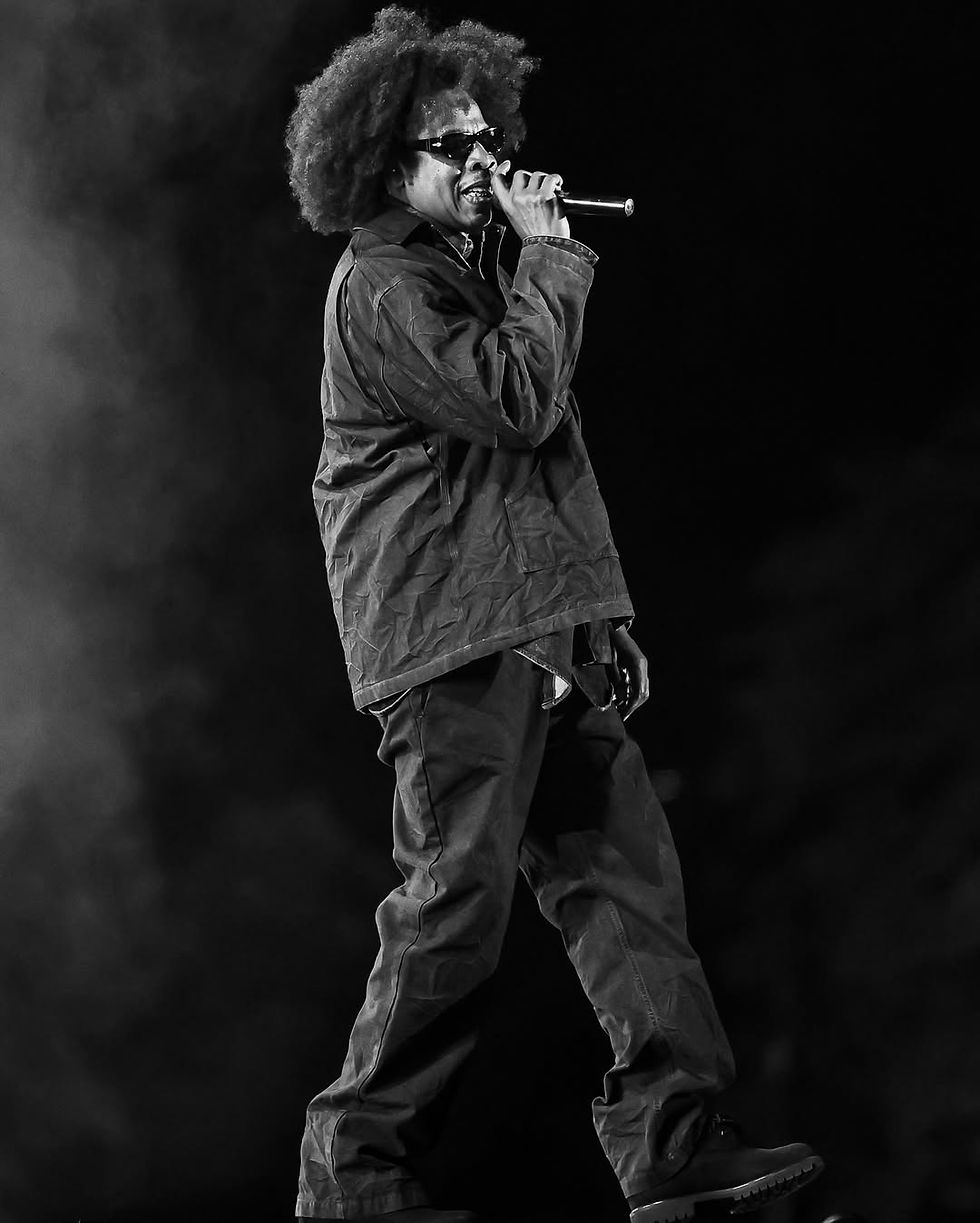
Jay-Z doesn’t step into Roots Picnic to “battle” anybody. That framing is already outdated. He steps in to reassert hierarchy through cultural memory control—who gets to be remembered as what, and on what terms. That’s the entire structure underneath the applause. "Must I remind you niggas," is the general vibe.
When he opens with:
“The jig is up, n****, I’m up 10, wrong chart champ…”
This isn’t about Drake as much as it’s about metrics vs meaning. Drake lives inside the scoreboard era—streams, charts, first-week numbers, algorithmic validation. Jay is speaking from a post-scoreboard position. “Up 10” isn’t arithmetic. It’s symbolic dominance. He’s saying the game you’re playing is not even the game I’m in.
And then he flips it:
“N****s looked up to Hov, I never looked up to them”
That’s not arrogance. That’s timeline control. He’s establishing himself as an origin node rather than a participant. Drake is a product of the ecosystem; Jay is positioning himself as part of the architecture.
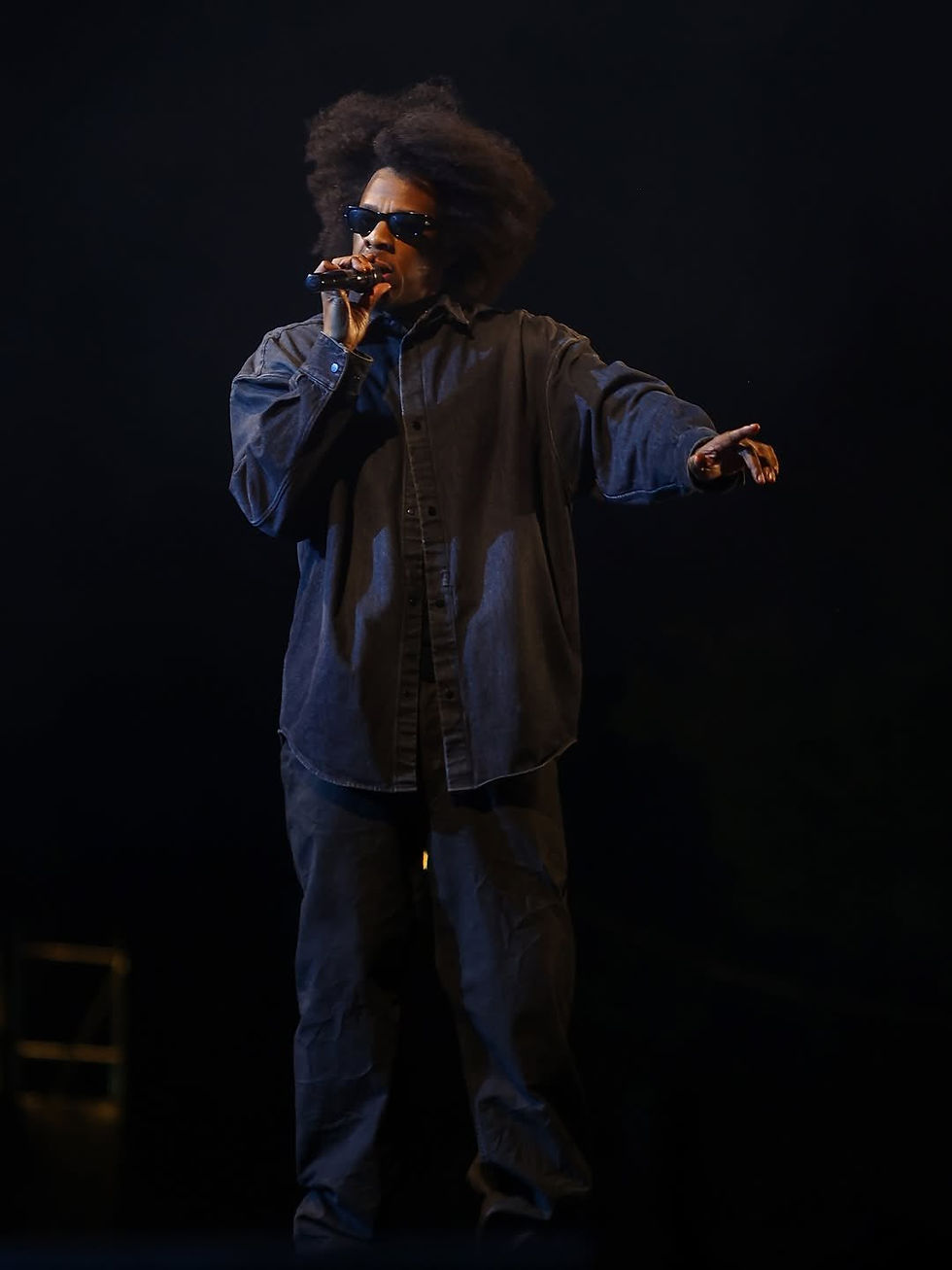
This is where the Drake tension actually lives. Not in insults. In jurisdiction.
Drake’s entire brand is proximity—he absorbs eras, flows, accents, emotional registers. He’s culturally adaptive. Jay is doing the opposite here: he’s drawing hard borders around legacy and saying you don’t get to stand on my floor while pretending we’re peers.
That’s why the bar hits harder than it looks on paper.
Now Kanye:
“You ever heard of wonder-kin? My children are some of them…”
This is where shit starts to get real. No more industry talk. This becomes boundary enforcement. This is what we like to call moral inversion—Jay frames himself as the one protecting innocence while implicitly casting Kanye’s past commentary as violation, not criticism.
Not necessarily rap beef anymore, it’s reputational policing through performance.
Nicki Minaj’s references operate differently:
Reported bars lean into her public affiliations and controversies around her husband, Kenneth Petty, and her political signaling. What Hov is doing here is associative compression—he collapses a decade of public narrative into a few lines and lets audience memory do the rest.
That’s important: he doesn’t need full explanation because he’s relying on cultural autocomplete. If you know, you know. If you don’t, you’re not the audience.
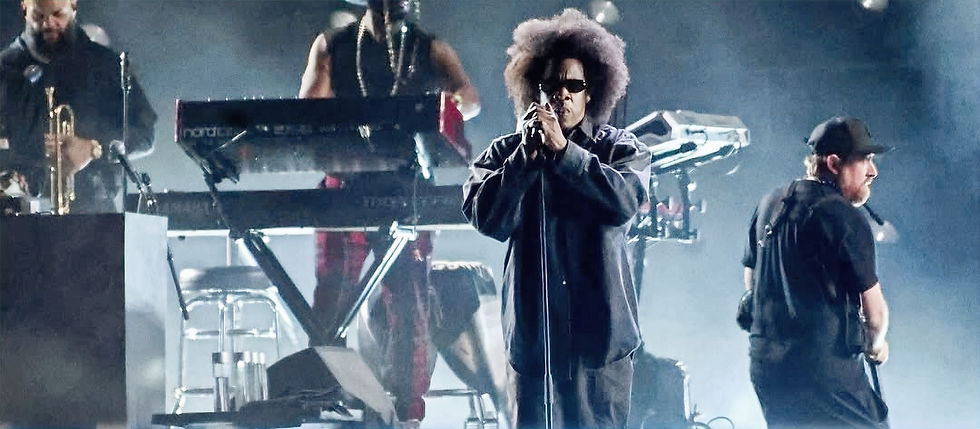
Dame Dash is the most structurally interesting target.
When he leans into language interpreted as “chatty,” “down bad,” and legacy positioning, it’s not just insult—it’s post-company accounting. Dame represents a former co-founder in a broken partnership where the argument is no longer personal, it’s historical: who actually built what.
And Jay’s rhetorical move is simple:
He refuses litigation. He goes straight to verdict.
That’s why the Dame references feel colder than the Drake ones. Drake gets competitive framing. Dame gets finality.
Now zoom out.
The entire freestyle is built on three primary literary mechanisms:
First—status inversion. Jay constantly flips perceived advantage. Charts become irrelevant. Noise becomes evidence of insecurity. Attention becomes a liability.
Second—allusive density. Every bar depends on external context—past interviews, old feuds, industry knowledge. This is not accessible rap. This is gated rap. It rewards proximity to history.
Third—jurisdiction shifting. He never stays in one frame long enough to be challenged. If Drake brings charts, Jay moves to ownership. If Kanye brings emotion, Jay moves to family. If Nicki brings controversy, Jay moves to implication. It’s rhetorical evasiveness disguised as dominance.
And this is where the comparison to Drake collapses in a very specific way.
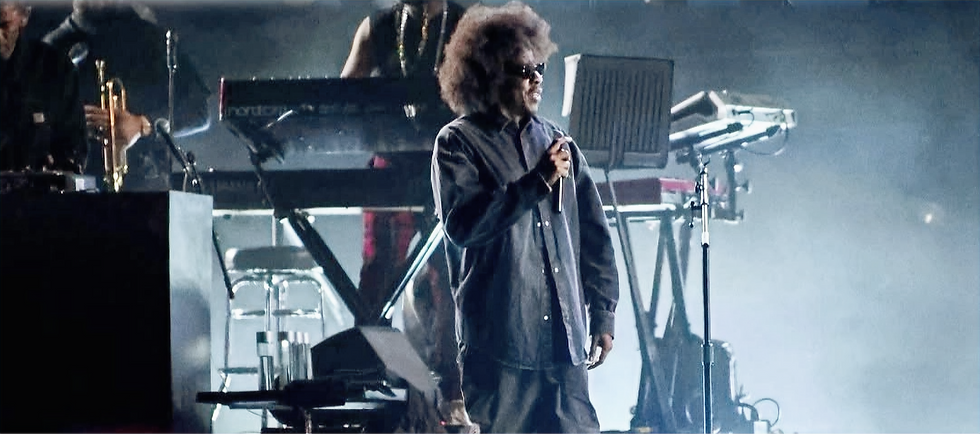
Drake’s “Janice STFU” style writing—typical of his recent output—is built on immediacy and emotional directness. It hits fast, it’s digestible, it lives or dies on surface-level reaction. It’s designed for replay loops and quote tweets. It doesn’t require a map.
Jay’s freestyle requires a map, a timeline, and in some cases a memory of 15–20 years of hip-hop politics.
That’s not automatically “better.” It’s just structurally different intelligence.
Drake operates like social media—optimized, reactive, emotionally legible.
Jay operates like legacy infrastructure—slow, layered, jurisdictional.
One is designed to trend. The other is designed to outlast.
And that’s the actual gap people are circling without naming it.
Performance grade-wise:
Delivery: elite control, almost conversational intimidation
Writing: uneven density but high symbolic efficiency
Impact: maximal cultural disruption per minute
Overall: A- performance, A cultural moment
Not because the lyricism is technically untouchable—it isn’t—but because the entire thing functions as a reminder that in hip-hop, there are still tiers that don’t show up on charts, playlists, or engagement metrics.
This wasn’t a freestyle meant to compete.
It was a reminder that competition is no longer the category.

Comments