Atlanta’s Not Changing—It’s Being Decided. And Most of You Missed the Meeting.
- reignitedtheseries
- Apr 27
- 5 min read

by Ken Oswald "__yak" Vann, Jr.
Monday, April 27, 2026

I had no idea what a TAD was until I was sitting at brunch this weekend with a few people from the Mayor’s office—like not “I’ve heard of it,” not “I kinda know,” I mean if you asked me Friday I probably would’ve asked if TAD was on Tidal or Spotify.
Don’t worry, they explained it to me, and I realized almost immediately this isn’t some obscure policy thing—it’s one of the main ways Atlanta has been shaping itself while everybody else argues about the surface-level version of what’s happening.
Which is usually how this goes.
We argue about what we can see, and then act surprised when the real decisions were made somewhere else entirely.
Cities don’t drift into inequality the way people like to pretend they do—they get designed, reinforced, ignored, then “rediscovered” once the numbers make sense again. That map everybody loves to reference from back in the day? That wasn’t history, that was instruction.

So when people talk about Atlanta like it just ended up uneven, I already know they’re skipping the part where the unevenness was planned, maintained, and then left alone long enough to feel natural.
A Tax Allocation District is just the modern version of that same idea, except now the city is trying to bend the outcome in the other direction. You freeze the current value of an area that hasn’t seen investment, and instead of waiting for the market to magically care about it one day, you take the future growth from that area and force it back into itself—streets, infrastructure, housing, all the things that never seem to arrive until it’s already profitable to build them.
Which sounds technical until you say it the honest way—this isn’t about taxes, it’s about forcing time to move faster in places the market ignored.
Because the market doesn’t revitalize anything. It waits. It watches. It calculates. Then it shows up late and acts like it was always part of the plan. That’s like pulling up after a fight is over talking about “we handled that”—no, you observed. The city is the one deciding whether the fight happens at all.

And if you need proof of that, go look at any corridor that’s been left alone long enough. Not in theory—actually look at it. Look at Campbelton Rd. That sh~t ain’t been updated since I moved to Atlanta over 20 years ago. That’s what “letting the market figure it out” produces when there’s no immediate upside. Quiet stagnation. Deferred everything. A whole lot of “we’ll get to it” that never turns into anything.
Then you look at what happens when the math changes—cranes, timelines, movement. Atlantic Station didn’t become Atlantic Station because somebody woke up inspired, it became Atlantic Station because the risk got engineered out of the equation. Same thing with Princeton Lakes. Same pattern, same outcome. You change the math, capital shows up. Every time.

So when people start talking about “well that money could’ve gone to schools or services,” I get where that instinct comes from, but it skips a step. It assumes that growth was coming anyway, just waiting politely to be collected and redistributed. A lot of these areas weren’t producing that kind of growth at all—that’s the reason they were targeted in the first place. You can’t talk about “losing revenue” from something that didn’t exist without the intervention. That’s like arguing over profits from a business nobody was willing to open—it sounds responsible until you realize it’s just fear of making a bet.
And make no mistake, TADs are a bet. The city is betting that if it invests early, it creates value later. Atlanta has already cashed that bet multiple times, so the conversation shouldn’t be “do they work,” it should be “what are we using them to build now.”

Because here’s where this stops being abstract—Atlanta is expensive in a way that’s starting to feel structural, not temporary. Home values pushing into the mid-$400Ks, rents hovering around $1,700, a majority-renter city with a whole generation trying to figure out how to step into ownership while the entry point keeps moving further away. At the same time, we’re building nonstop, just not for them.
That’s the part people keep dancing around.
We’re not lacking development.We’re lacking alignment.
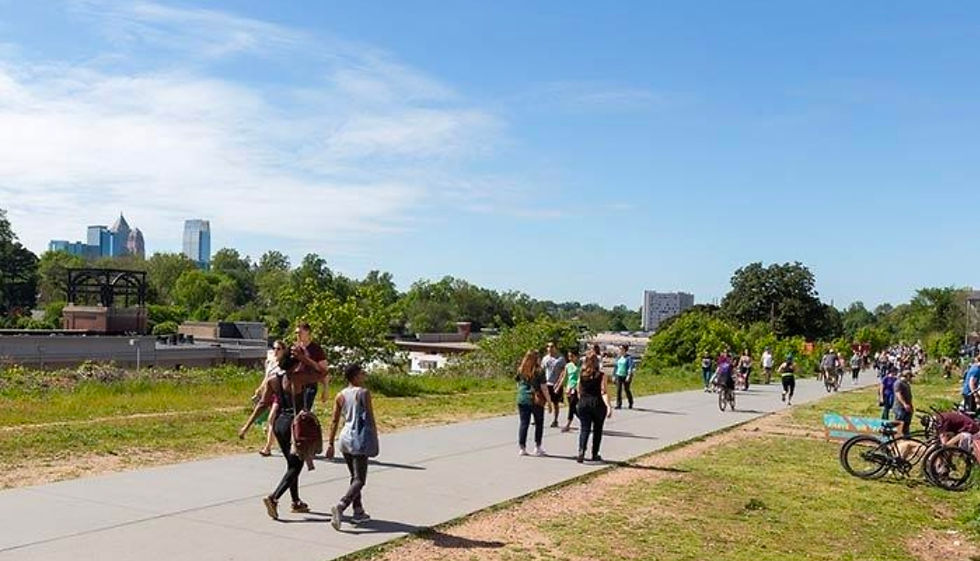
Because if most of what’s getting built is priced for people who already made it, then growth isn’t solving the problem—it’s just reorganizing who gets to stay close to it.
And this is where TADs either become useful or just another layer of the same pattern with better language.
Because inside a TAD, the constraints shift—risk drops, infrastructure gets handled, projects that normally wouldn’t make sense suddenly do—which means the city has leverage whether it chooses to use it or not. If public mechanisms are helping make development viable, then the outcome can’t just default to whatever produces the highest return. There has to be intention baked into it—housing that actually reflects how people live right now, not how investors wish they did.

Starter ownership.Realistic rent.Mixed-income that isn’t quietly segregated.
People who make the city function should be able to live in it without feeling like they’re one lease renewal away from being pushed out of their own routine.
And yeah—displacement is real. But that’s not some mysterious side effect of development existing, it’s what happens when development shows up without rules. No affordability requirements, no protections, no long-term thinking—of course people get pushed out. That’s not a flaw in the tool, that’s a decision about how to use it. Atlanta has made that decision poorly before, so acting confused about the outcome now feels a little performative.
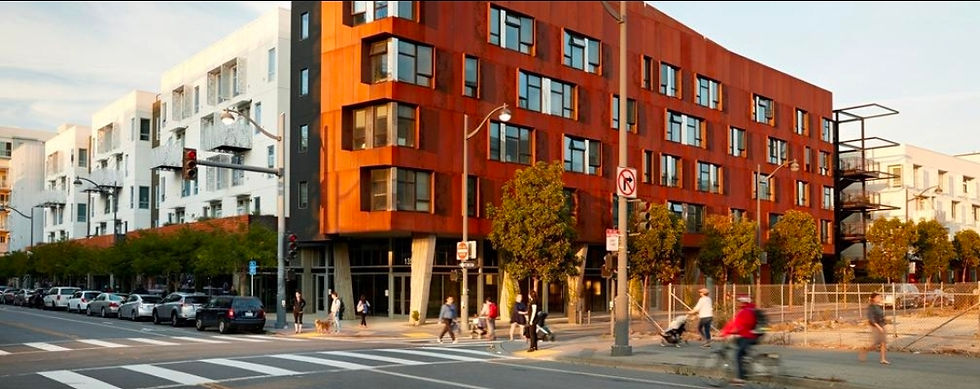
Which is why this next phase matters.
Because Atlanta doesn’t have a growth problem—it has a distribution problem. You can move five miles and feel like you crossed into a different economic reality, and that’s not random, that’s years of selective investment finally catching up to itself. So when you see cranes everywhere right now, that’s not just development—that’s the city actively deciding what the next version of itself looks like and who gets to be included in it.
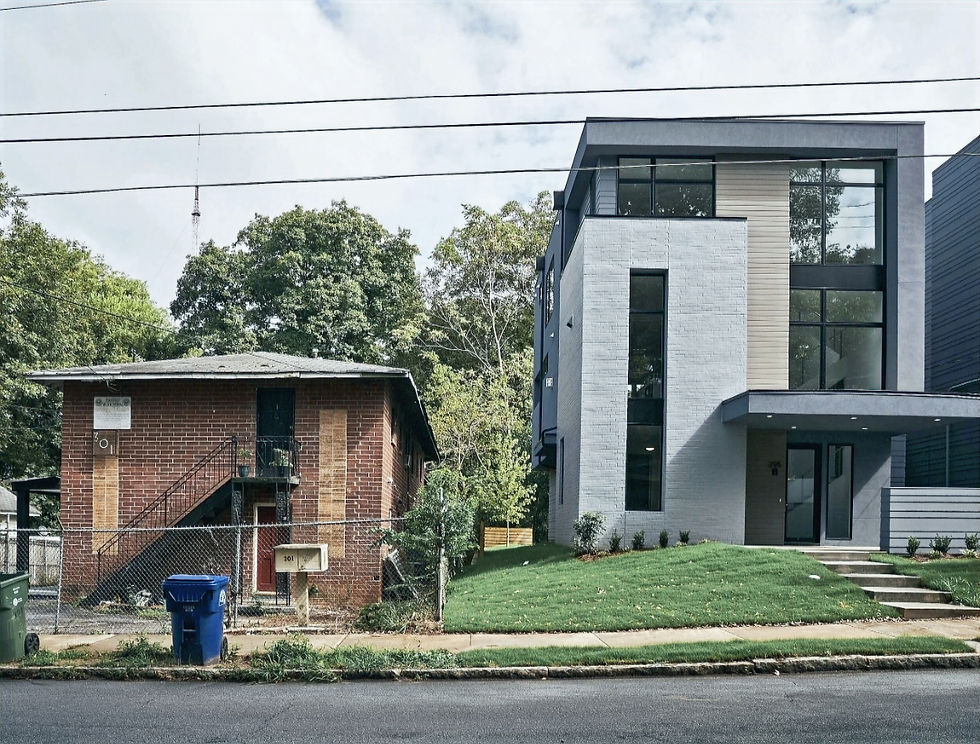
I walked into brunch not knowing what a TAD was.
I walked out realizing it’s one of the few tools that can determine who has access to Atlanta before that access gets priced out of reach—and once you see it like that, you stop asking whether the tool is good or bad and start asking a much more uncomfortable question:
who is it actually being used for?



Great Article!💪