“Atlanta Just Became the Most Watched City in America… and Nobody’s Talking About It”
- reignitedtheseries
- Apr 30
- 4 min read

by Ken Oswald "__yak" Vann, Jr.
Thursday, April 30, 2026

Congratulations, Atlanta...We're Number One!
Not in affordability. Not in transit. Not even in keeping the people who make this city interesting actually able to stay here.
No—we’re number one in surveillance.
Before anybody in the comments starts with the “that’s not what it means” sh–t, chill. I already looked into this for all of seventeen minutes. The number is actually real. Roughly 124 cameras per 1,000 people when you count the full ecosystem: public systems, private businesses, traffic cams, integrated networks. Not just police. Not just government. Everything.
Which is exactly the point.

People think this is about safety.
It’s not about safety. It’s about visibility.
Safety is the marketing. Visibility is the product and once a city becomes fully visible—trackable, searchable, replayable—it becomes "manageable". Not safer necessarily. Just easier to monitor, easier to control, easier to explain after some sh–t already popped off.
And that’s a very different goal than actually fixing anything.

And I'm gonna let you know something real n–ggas been knew.
Cameras don’t stop crime like people pretend they do, and this ain't about to be some Tom Cruise, Minority Report goofy sci-fi sh–t. Nobody’s getting intercepted mid-thought because Alexa “felt something off.”
What cameras can actually do is clean up the story after the fact, maybe. That bs, Cole Tomas Allen, video from the White House Correspondents' Dinner "shooting attempt" actually leaves more questions than answers (that's another story...stay tuned).
They sometimes help close cases. They help build timelines. They give the system something to point at and say, “See? We got him.”
Which—fair. That matters.
But let’s not confuse documentation with prevention. That’s two completely different conversations, and, even though they're not the only ones guilty of this, the city keeps blending them like the people would good sense won’t notice.
And here’s where this all gets expectedly uncomfortable because surveillance is never evenly distributed. Never has been.
It clusters. It concentrates. It follows attention, money, fear, and if you’ve lived in Atlanta long enough, you already know where those three things tend to overlap.

People like to talk about surveillance like it’s neutral—like it just “exists.”
Nah, twin.
It gets placed.
And placement tells you everything.
It tells you what a city is trying to protect.
It tells you what it’s trying to watch.
And more importantly—it tells you what it doesn’t trust.
Now let’s say the quiet part out loud.
The same areas that tend to be over-policed… tend to be over-surveilled, not because of coincidence, but mostly because of design.
That’s not new. That’s just the digital version of an old playbook.
Except now instead of just officers, you’ve got infrastructure. Permanent. Networked. Scalable, and increasingly powered by AI systems that don’t just see...but categorize.
And once you start categorizing people at scale, you’re no longer just watching a city.
You’re interpreting it.

It’s not just about being seen anymore—it’s about how the system decides what you are when it sees you.
Now zoom out.
Atlanta isn’t alone in this. New York, Chicago, D.C.—they’re all heavily surveilled too, and people point to that like it’s justification.
“See? All the big cities do this.”
Yeah. Big cities also have density, tourism, money, political attention, and a whole lot of reasons to monitor movement. So the real question isn’t “why Atlanta?” It’s—what kind of city are we trying to become?
If you've been posting the slightest attention, we’re scaling infrastructure like a global city… while still dealing with very local problems that cameras don’t solve.
That gap matters.

And here’s where people get it twisted.
This isn’t some dystopian future creeping in.
This is present-day policy moving exactly how policy always moves—quietly, incrementally, with just enough justification to avoid pushback. Nobody announces, “Hey, we’re building a fully surveilled environment.” They say things like: “public safety”, “community partnership”, “camera integration”, “real-time crime center”, etc.
Sounds good. Feels reasonable. No alarms go off—until one day you look up and realize the entire system is already in place.
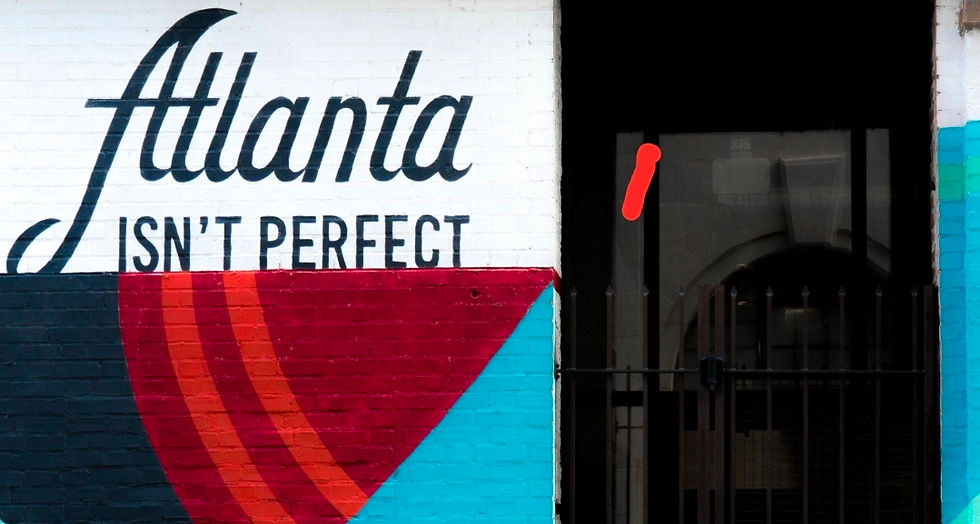
So yeah—congrats, Atlanta.
We’re leading the country in something again.
The cameras are here, the networks are built, and the AI layer is coming online whether people understand it or not.
This isn’t about stopping it. That ship already sailed.
The real question is whether anybody is paying attention to how it’s being used—and who it’s being used on because visibility without accountability isn’t safety.
It’s just control with better lighting and higher resolution.
And if you don’t understand the difference, you’re not watching the system.
The system is watching you.


Comments