“Four Bottles, One Fatal Chase, and a System That Refuses to Rewind: The Cyrus Carmack-Belton Case Exposes the Cost of Wrong Assumptions”
- reignitedtheseries
- 1 day ago
- 4 min read

"When a false accusation becomes momentum, and momentum becomes violence, the question stops being what happened in the store—and becomes why anyone thought pursuit was the answer in the first place."
by Ken Oswald "__yak" Vann, Jr.
Monday 01 June 2026
Here we are, again, haunted by the same uncomfortable thought: cases like this don’t unfold in isolation—they unfold inside a historical rhythm that America refuses to name out loud.
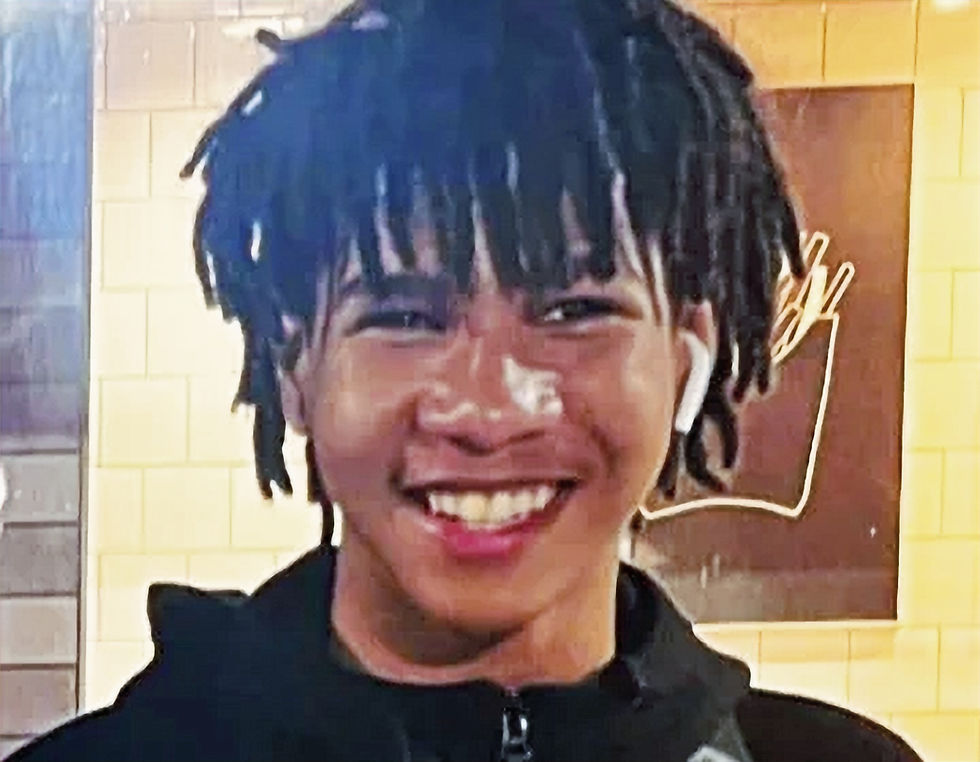
Once you strip everything down in the Rick Chow trial, you’re left with something painfully simple. A 14-year-old, Cyrus Carmack-Belton, is accused of stealing four bottles of water. Surveillance footage reportedly shows he puts them back. The accusation is wrong. Still, he’s confronted, still he runs, still he’s chased over roughly 130 yards, and still he ends up shot in the back.
And I don’t know how you sit with that sequence and treat it like a normal “self-defense debate” without acknowledging the deeper pattern underneath it.
This is where Latasha Harlins comes in. Not as a rhetorical flourish, but as a reminder of how long this pattern has been documented. 1991, Los Angeles. A store dispute over a bottle of orange juice. She’s accused of stealing it. Surveillance shows she had money in her hand. She’s still shot in the back of the head by a store owner as she turns away. The legal outcome of that case still echoes through American memory because it exposed something brutal: once suspicion locks in, innocence doesn’t always matter in real time. Fast forward decades and the surface details change, but the structural logic doesn’t.
Now you’ve got Cyrus in a South Carolina convenience store in 2023. Different city, different store, different generation. Same starting mechanism: suspicion over low-value merchandise that turns out to be unfounded. And again, the accusation doesn’t dissolve cleanly when the facts correct it. It metastasizes into confrontation. Confrontation becomes pursuit. Pursuit becomes force. Force becomes death.
People want to treat that as a collection of separate decisions. It’s not. It’s a chain reaction, and once the first assumption is wrong, everything downstream is contaminated.
Mike Brown sits in a different category of cases, legally and factually, but culturally he belongs in the same conversation because of what happened after his death. The immediate scramble wasn’t just about establishing facts—it was about constructing narrative permission structures. Who was he? What did he do? How should we interpret his final minutes? The public wasn’t just processing a shooting; it was being asked to evaluate the character of the person who got shot as if that somehow resolved the legitimacy of the force used.
That’s the connective tissue across all of this. The victim gets placed on trial in the public imagination almost as quickly as the incident itself is reported.
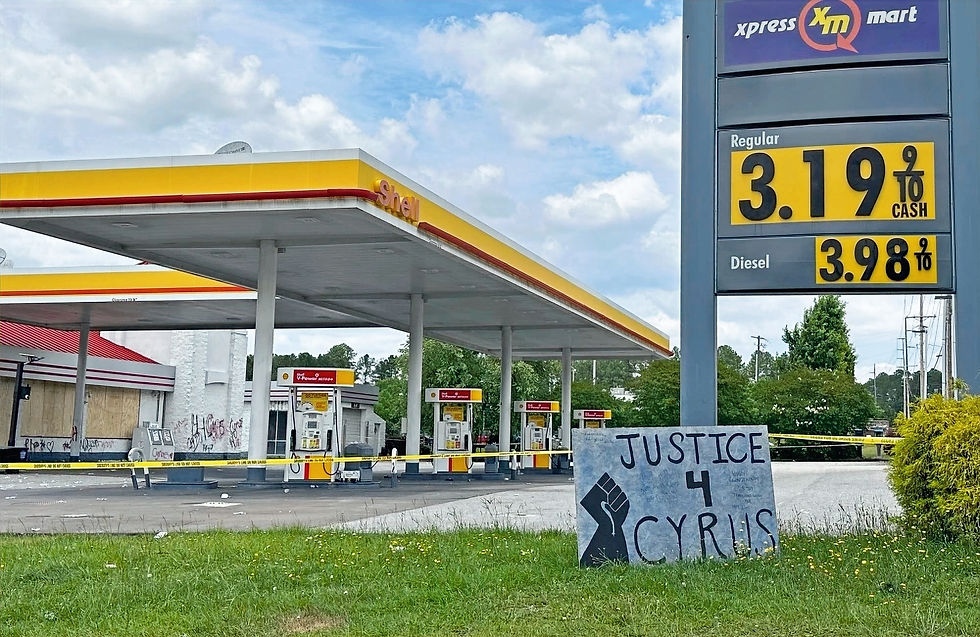
You see that reflex starting to form again in cases like Cyrus’s. Even with surveillance footage reportedly showing him put the water back, even with prosecutors arguing there was no theft, the conversation still drifts toward what happened in the chase, what he was carrying, what he might have done in the final seconds. The original error—the false accusation—is treated like a minor preface instead of the ignition point.
That’s the mechanism that keeps repeating: the accusation outruns the evidence, and even when the evidence corrects it, the system doesn’t rewind. It accelerates.
I know I’m supposed to say “we should wait for the jury” and, legally, yes—that’s the structure we operate under. But socially, the pattern is already visible regardless of verdict. Because what’s on trial here isn’t just whether Rick Chow reasonably perceived a threat in the final seconds. It’s also whether an armed pursuit initiated over a mistaken accusation can be culturally normalized as an understandable sequence of events, and that’s where things get sharp.
Because once you accept the idea that suspicion justifies pursuit, and pursuit justifies escalation, you’ve effectively created a system where the initial error doesn’t matter as long as the downstream fear feels real enough.
That’s not law in a neutral sense. That’s human perception being given operational authority, and human perception is biased, especially when it’s running on fear, stereotype, or expectation.
We’ve seen this logic play out in different forms for decades. In Latasha Harlins’s case, the perceived theft became more real than the video evidence that contradicted it. In Mike Brown’s case, the narrative struggle over who he was became part of the national processing of his death. In Cyrus’s case, the alleged theft collapses under footage, yet the physical pursuit continues as if the original suspicion still holds weight.
Different eras. Same structure: accusation → escalation → irreversibility → retrospective justification.
What makes the Cyrus case especially stark is how cleanly the initial premise falls apart. If the reporting holds, there is no theft. There is no missing product. There is just an accusation that should have ended the encounter before it ever left the store.
Instead, it left the store, turned into a chase, and ended in gunfire, and once it reaches that point, everyone is forced into post hoc reasoning—reconstructing meaning from a situation that should never have escalated in the first place.
I think people underestimate how much of this isn’t about the final moment. It’s about everything that made that final moment feel permissible to someone holding a weapon.
That’s the real question the historical cases force us to confront.
Not just what happened in the last second, but why the first wrong assumption was allowed to travel so far without being corrected because when that correction never happens, or happens too late, you don’t get resolution.
You get outcomes.
That’s the part that keeps repeating across decades, across cities, across headlines.
Different names. Same pattern.
Once you see it, you can’t unsee it.
That’s not a series of isolated tragedies.
That’s a system revealing itself in fragments.
And the fragments always rhyme.


Comments