"The Supreme Court Verzuz Nobody Watched"
- reignitedtheseries
- Apr 30
- 5 min read

What is Rucho v. Common Cause? A clear breakdown of gerrymandering, voting rights, and how Supreme Court decisions shape Atlanta elections.
by Ken Oswald "__yak" Vann, Jr.
Thursday, April 30, 2026
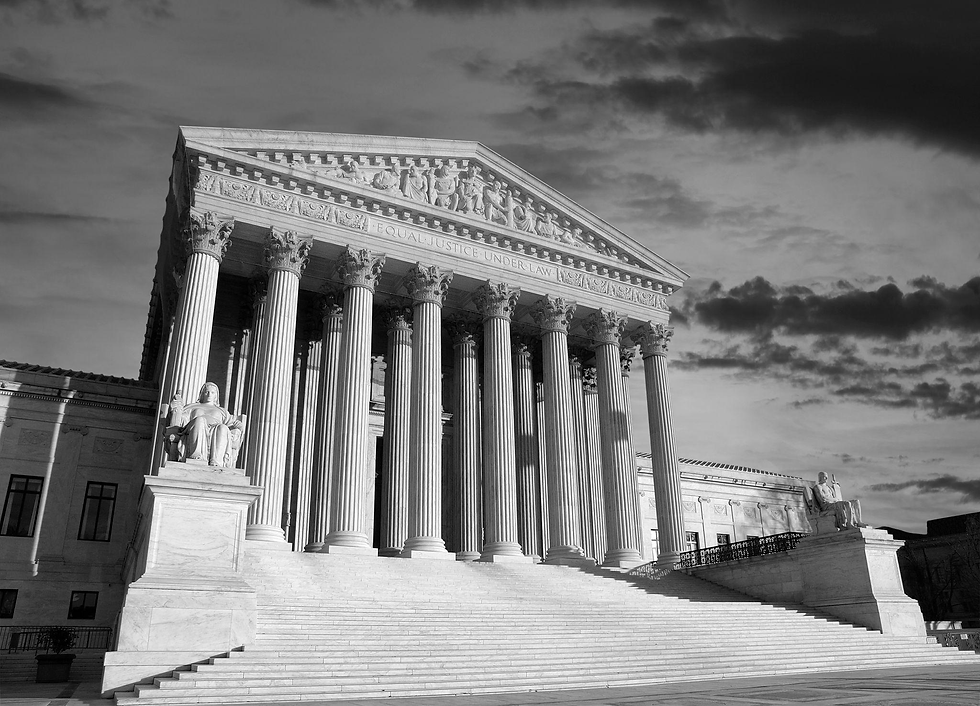
Let me start by saying something that some of hear don't wanna hear...
If T.I. and 50 Cent dropped a Verzuz tonight, Atlanta would suddenly become a room full of experts. Everybody would have a take. Barbershops will sound like ESPN in the morning. Ten podcasts will pop up seemingly overnight. People would argue like history was on the line. That’s not even a criticism—that’s just how culture moves. We pay attention when it feels like something is happening to us, in real time.

But say Rucho v. Common Cause out loud and watch how quickly the energy disappears. Eyes glaze over. Phones come out. Conversation dies before it even starts.
And that’s exactly how something this important slips through.
Because while we’ve been trained to react to moments, the system moves through decisions. Quiet ones. Technical ones. The kind that don’t trend—but don’t go away either.
Rucho is one of those decisions.
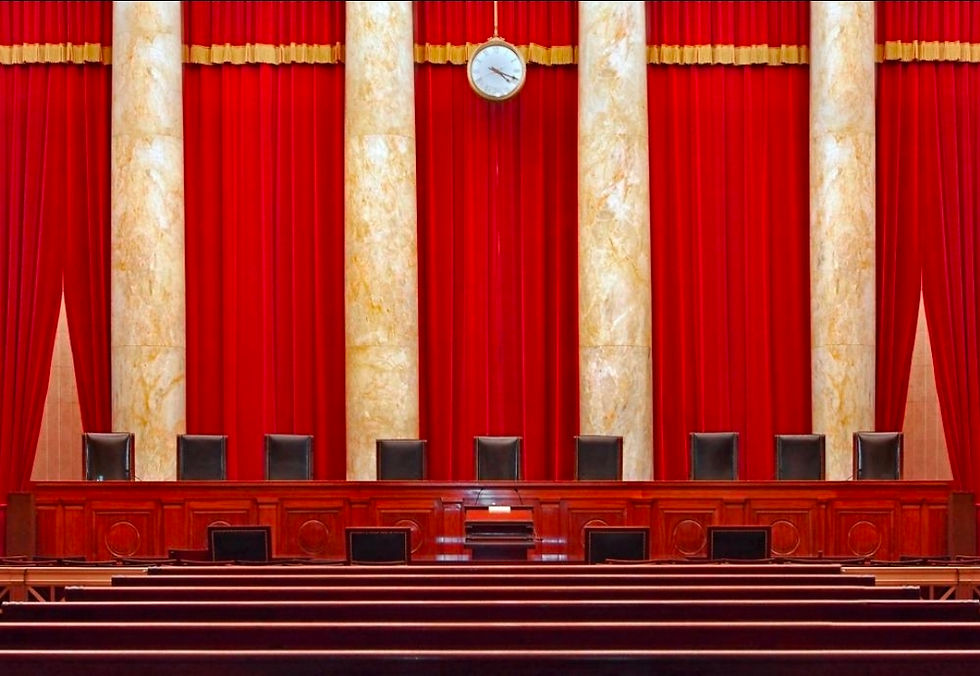
Not dramatic on the surface. No fireworks. No viral clip. Just a sentence, essentially, that says: even if politicians draw unfair voting maps to help themselves stay in power, federal courts are not going to step in and fix it. Not because it’s fine. Not because it’s fair. But because the Court decided it’s ain't got sh–t to do with them.
Ain't that 'bout a b–tch?
Once the referee says, “I’m not calling that,” the game doesn’t get cleaner. It gets sharper. More deliberate. More confident in what it can get away with. Like the NBA with Bam Adebayo's 83-point game, I digress (but nah, that was bullsh–t).
To really understand what the f— just happened, you have to zoom out a little, just enough to see the pattern.
Black people get the right to vote after the 15th Amendment, and almost immediately the system starts figuring out how to manage that reality. Not because the vote was symbolic, but because it worked. Because when Black people voted in large numbers, outcomes changed. That’s the part that always gets softened in the retelling. It wasn’t about access alone. It was about power.
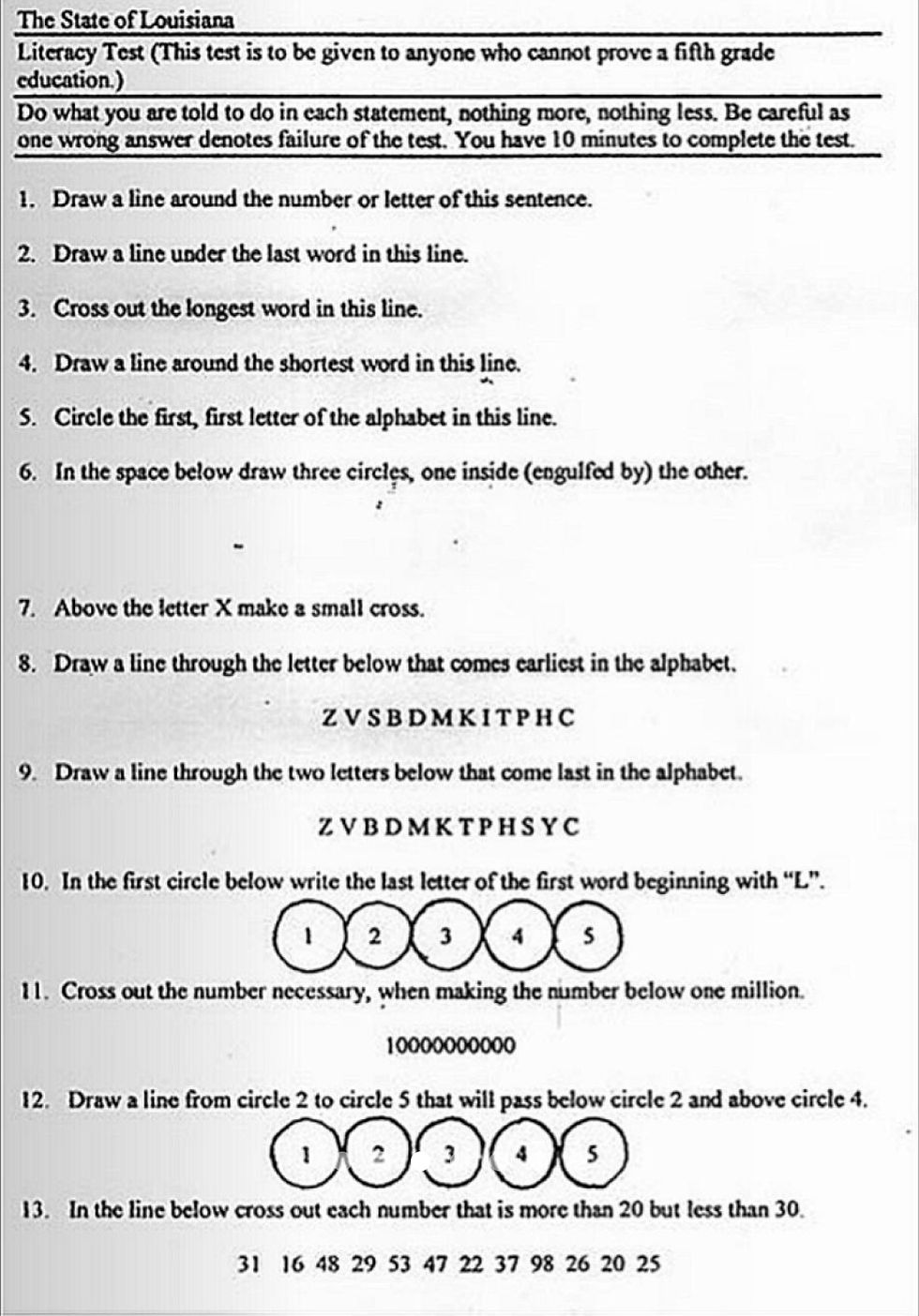
So the response wasn’t random. It was structured. Poll taxes, literacy tests, intimidation—tools white people designed to make sure the right existed without letting it fully operate. That era eventually runs into a wall in 1965 with the Voting Rights Act of 1965, which doesn’t just say “don’t discriminate,” but actually puts certain states under watch. It forces them to check in before changing voting rules, kinda like watching your girlfriend make spaghetti, "Hol' up—what was that you just put up in there?...you ain't slick!"
That oversight mattered more than people realize. It didn’t fix everything, but it slowed down how aggressively the system could adapt.
Then in 2013, the Court decides Shelby County v. Holder, and that “check first” system basically disappears. Not with a dramatic speech or any news coverage, just a legal adjustment that says those protections are outdated. What that means in practice is simple: states no longer have to ask before making changes. They can move first, and if something goes wrong, you have to challenge it afterward. You just are gonna have to eat the spaghetti, homie.
Then Rucho comes in a few years later and finishes the thought. If Shelby removed the early warning system, Rucho limits the cleanup. It draws a line between race and politics and says courts can still step in if race is clearly the issue, but if politicians say they’re just playing politics—just drawing maps to win—then federal courts are stepping back.
Now take a step back and look at how that plays out in a place like Atlanta.
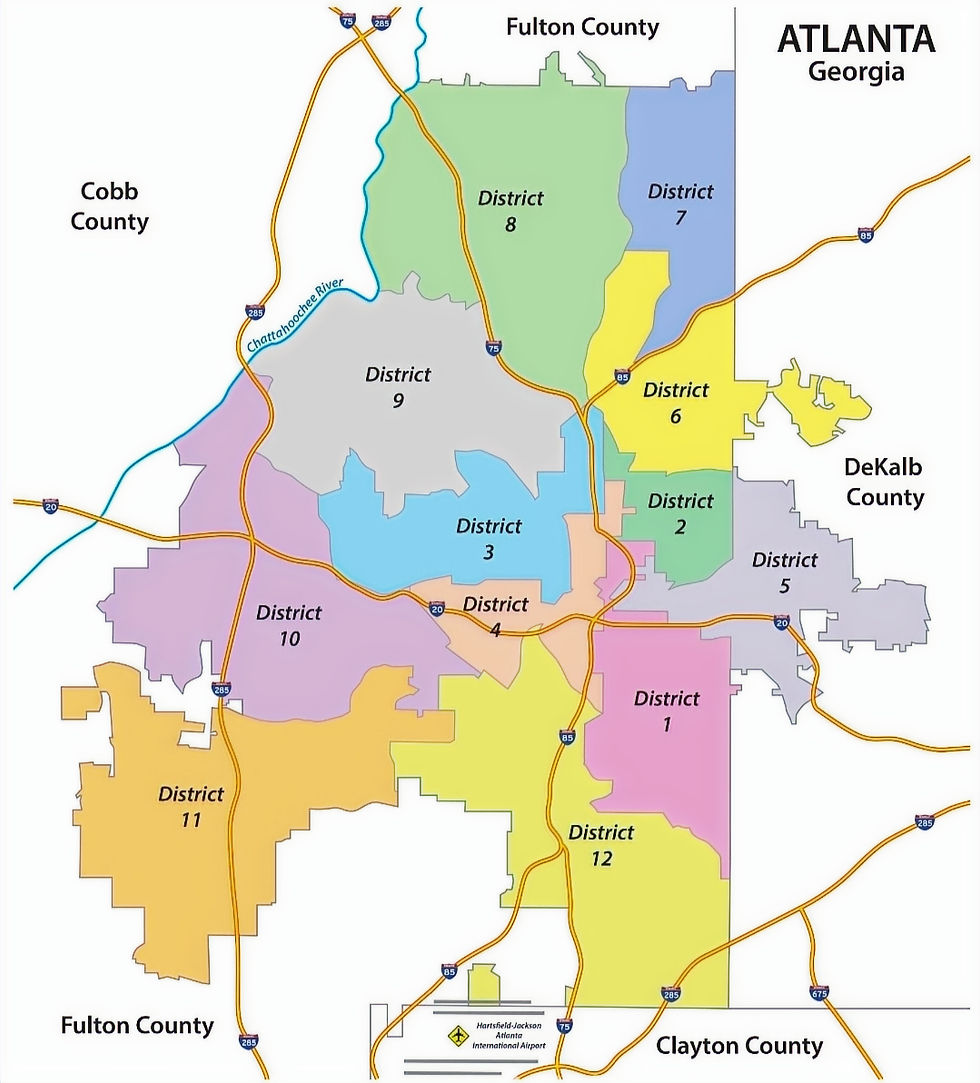
You’ve probably noticed it without naming it. Some districts feel locked. Not competitive, not really up for debate. They win by margins so large it almost feels ceremonial. Other districts feel like they’re just out of reach every single cycle, like you can see the possibility but never quite touch it.
That’s not a coincidence. That’s placement.
The same voters, depending on how they’re grouped, can either dominate one district or be diluted across several. It’s the difference between concentrating power and spreading it thin. When people talk about “packing” and “cracking,” it sounds technical, but the effect is simple. In one case, a community’s influence is piled into one place where it wins big and stops there. In the other, that same community is divided just enough so it can’t quite win anywhere.
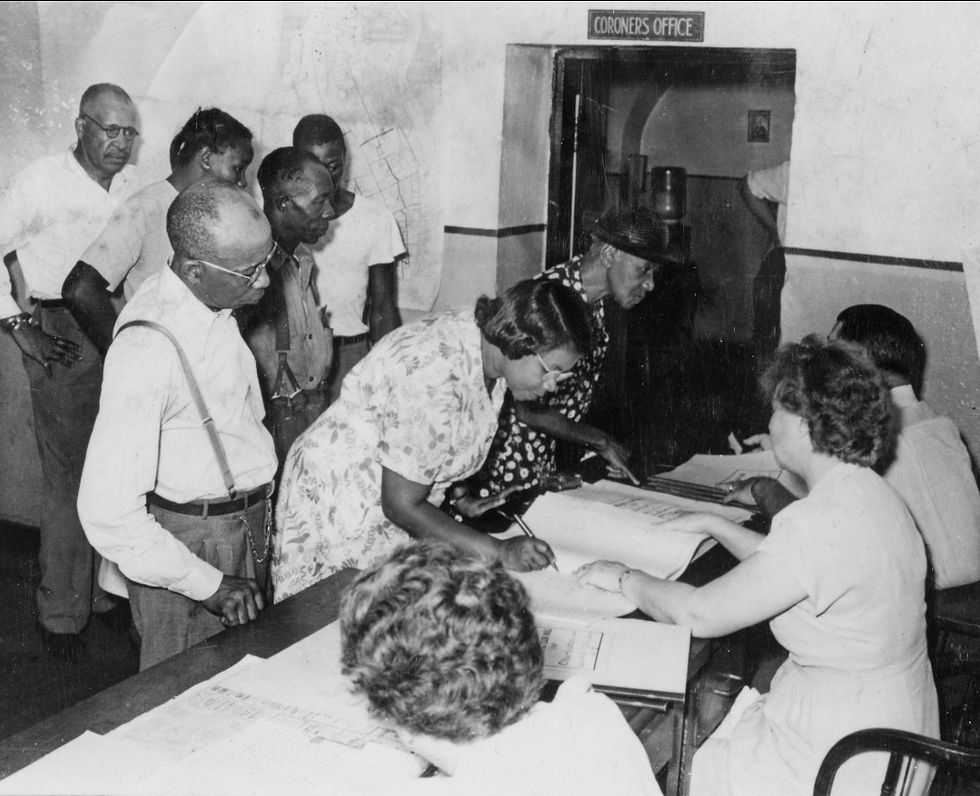
So when people hear all this and jump to “then voting doesn’t matter,” they’re reacting to the frustration, not the reality. Voting still matters. It just doesn’t translate the same everywhere, and pretending it does is part of why people feel confused when outcomes don’t match effort.
What changed after Rucho isn’t the existence of gerrymandering. It’s the confidence behind it. The willingness to push right up to the edge of what’s legally challengeable and stay there. Especially in places where race and political behavior overlap, which is true in Georgia, where Black voters overwhelmingly support Democrats. That overlap gives cover. It allows mapmakers to say they’re targeting political behavior, not race, even when the impact lines up almost perfectly.
And this is where most conversations lose me, because they either get too abstract or too simplistic. Either it turns into legal jargon nobody follows, or it turns into “we just need to vote more,” like volume alone solves structure.
It doesn’t.
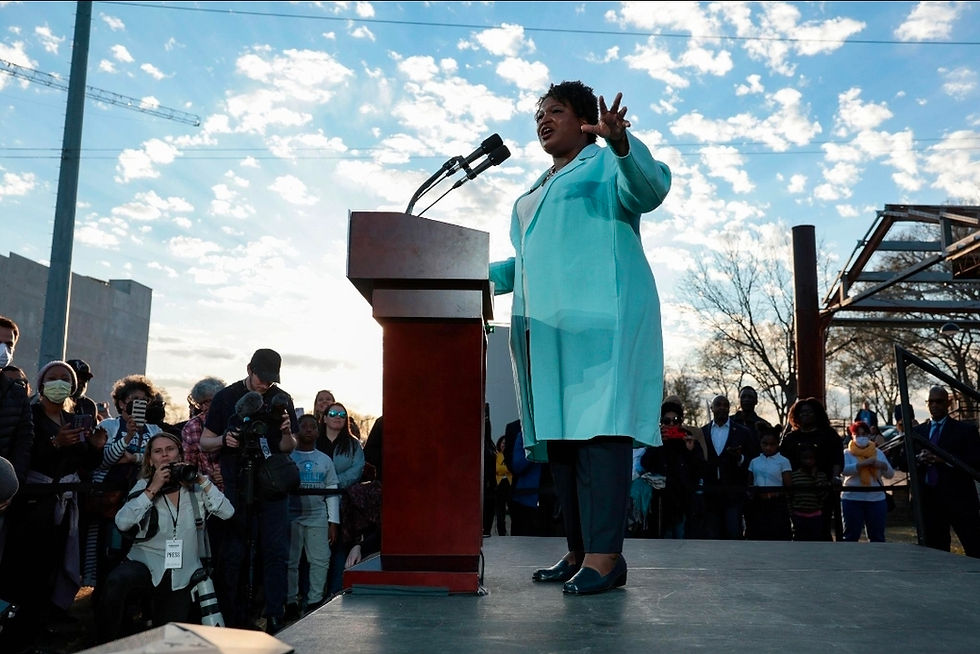
What people like Stacey Abrams understood—and actually built around—was something more grounded. Not hype, not just messaging, but infrastructure. Registration systems that run year-round. Networks that reach people where they already are. Education that makes the process clear instead of intimidating. Legal pressure where it can still be applied. Consistency instead of last-minute urgency.
That’s why Georgia didn’t change because of one election. It changed because the inputs changed over time.
But even then, the map doesn’t disappear. It adjusts. It absorbs. It holds shape in different ways.
You can see it in the numbers. In 2024, Republicans won about 53% of the statewide congressional vote in Georgia and still ended up with 9 out of 14 seats. Same electorate. Different translation. That’s not people failing to vote—that’s votes being arranged.
Which means the response has to be just as intentional.
Not louder everywhere, but sharper in specific places. Not chasing turnout as a feeling, but treating it like logistics. Making sure people are registered before deadlines instead of assuming they are. Making early voting the default instead of the backup plan. Making sure people know exactly where they’re going before Election Day shows up and life gets in the way. Because most missed votes aren’t protests—they’re interruptions.
And this can’t keep resetting every election cycle.
If engagement disappears after November, the system doesn’t have to adjust—it just waits. So the work has to live somewhere. Inside churches. On campuses. In barbershops. At events. Anywhere people already gather and trust each other. Not louder messaging—more consistent presence.
Because the truth underneath all of this is uncomfortable but simple.
Gerrymandering doesn’t depend on people not voting. It depends on people being predictable. Predictable turnout. Predictable drop-off. Predictable disengagement once the headline moment passes.
And if that’s the system, then the only real disruption is breaking that predictability in ways that actually show up in outcomes.
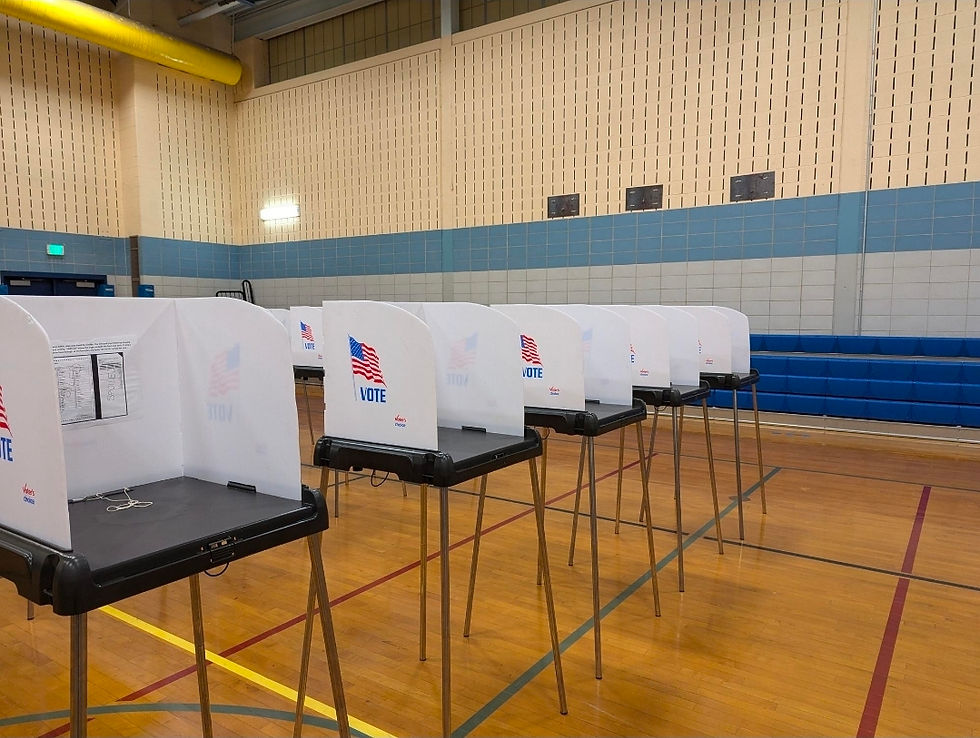
So no, you don’t have to memorize Supreme Court cases or turn into a policy expert overnight. That’s not the point.
But you should understand that while we were arguing about who had the better run, the system was quietly deciding something else entirely. Not who had the better catalog, but who gets to count the audience, how they’re seated, and which sections of the room actually get heard.
That Verzuz already happened.
Most people just didn’t realize they were in it.

Comments