Capitalism Isn’t Our Friend. It's the Battlefield.
- reignitedtheseries
- May 7
- 10 min read

"You’re on Elon Musk and Mark Zuckerberg’s platforms calling Killer Mike and Jay-Z sellouts. Make it makes sense!"
by Ken Oswald "__yak" Vann, Jr.
Thursday 07 May 2026

People keep calling Black capitalism the betrayal, but they’re skipping over the obvious part: capitalism is the reason most of the world even knows our names.
And no, this isn’t really about Killer Mike. It’s not really about Jay-Z. It’s not about one rapper taking a meeting, making a deal, buying a building, shaking the wrong hand, endorsing the wrong person, sitting too close to power, or saying something online that made everybody suddenly start typing like Huey Newton.
This is about proximity.

People think the argument is capitalism versus liberation, but it’s actually about who gets to touch power without everybody acting like they caught a disease.
That’s the game. Everybody wants Black people to have influence in theory, but the minute a Black person gets close enough to actually influence something, here come the purity police. Now it’s “sellout.” Now it’s “capitalist.” Now it’s “coonery.” Now it’s “he’s compromised.” And sometimes, yes, that critique is earned. Let’s not play dumb. Some people absolutely do use Blackness as a costume to make extraction look like empowerment, and some folks get a seat at the table and immediately become the table’s security guard, but the conversation gets lazy when we start treating proximity to capital as betrayal by default.
Because in the real world, distance from capital does not make you righteous. Most of the time, it just means somebody else owns the building, the bank, the platform, the label, the land, the grocery store, the hospital, the school, the algorithm, the data, the ticketing system, the security contract, and the narrative.

You can be pure and end up living in your car, no shade.
That’s the part nobody wants to say out loud.
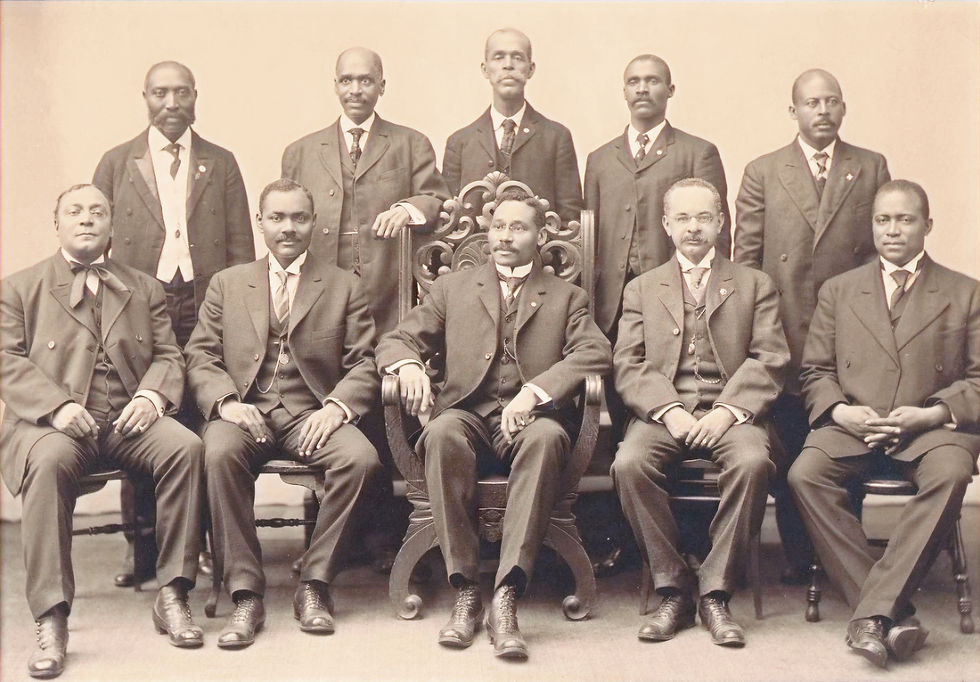
Black Americans did not become the most culturally, politically, socially, and financially influential Black population in the diaspora because America loved us. America hated us with policy. America hated us with zoning. America hated us with redlining, policing, prison contracts, bad schools, highways, textbooks, banks, insurance maps, plantations, and “urban renewal” plans that somehow always renewed everybody except the people already living there.
We were trapped inside the most powerful capitalist machine on Earth, and eventually we learned how to hack it.
That’s the uncomfortable truth.
Black America’s global power did not come from purity. It came from pressure. It came from being forced into the belly of the beast and figuring out how to turn rhythm, language, style, church, food, sport, literature, protest, humor, fashion, pain, and straight-up audacity into leverage.
That is how the blues becomes rock and roll. That is how jazz becomes America’s passport. That is how hip hop becomes the operating system for global youth culture. That is how Black athletes become multinational brands. That is how Black writers become the moral conscience of the republic. That is how Black artists become markets. That is how Black chefs become cultural historians with knives. That is how Black slang becomes corporate copy, Black rebellion becomes campaign language, and Black suffering somehow ends up in a museum gift shop with a $48 tote bag attached to it.

Lol. America is nasty work.
But that is the machine.
And yes, the machine exploited us. Obviously. Capitalism did not suddenly grow a soul because somebody put a breakbeat under a sample. It stole, copied, diluted, underpaid, erased, repackaged, and resold Black genius to the world with a cleaner logo and a white legal department.
But here is the part people like to skip: once enough of us learned the machine, some of us stopped being only the product.
We became the distributor.
That is the difference. That is why this conversation gets tense. People are not just mad at Jay-Z for having money. They are mad because he represents a deeper anxiety: what happens when the rebel learns the accounting system? What happens when the rapper owns the masters? What happens when the artist starts thinking like the gallery? What happens when the neighborhood kid does not just want to perform in the building, but wants to buy the building, control the door, negotiate the back end, and ask who owns the liquor license?
Now everybody gets nervous.
Because rebellion is adorable when it stays decorative. Put it on a T-shirt. Put it in a mural. Put it in a museum gift shop after the people who made it are dead, broke, priced out, or safely mythologized. You don't have to wait until they kill me to buy my merch, by the way—link at the bottom.

But rebellion with capital? Rebellion with lawyers? Rebellion with distribution? Rebellion with equity?
That is when the room gets quiet.
But this is where the diaspora comparison matters, because we have to be honest about what different systems have produced. In socialist and communist structures, Black people have sometimes received real material gains. Cuba is the obvious example. After the revolution, Afro-Cubans gained access to education, health care, housing, and formal rights that the old racial order had denied them. That matters. I’m not going to pretend socialism did nothing just because I’m making a case for capitalism’s role in Black American influence. That would be unserious.
But access is not the same thing as power.
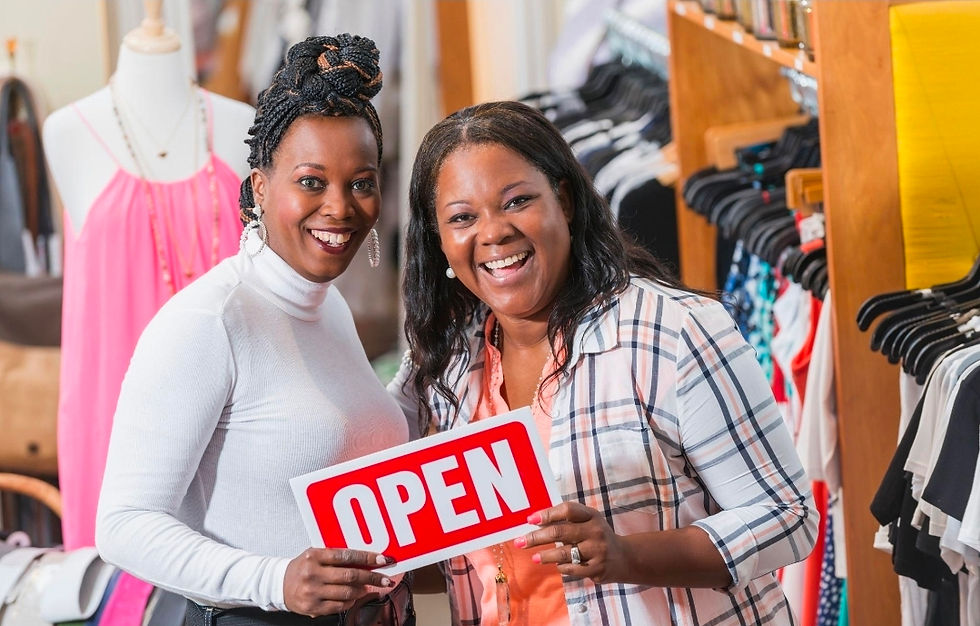
A state can give you a clinic, a school, a job, and a slogan. All of that matters. But if the state controls the press, the party, the money, the institutions, the permissible speech, the cultural channels, and the terms of mobility, then you do not own power. You are being administered by it.
That is not liberation. That is managed recognition.
When scarcity hits, when reforms come, when outside money starts flowing, when remittances become the difference between surviving and struggling, and sh–t his the fan, the old racial hierarchies do not magically disappear. The talk just gets slicker.
Same game. Different costume.
You see another version of this across African socialist and Marxist experiments. Liberation movements seized the state. They spoke the language of anti-colonial dignity. They rejected imperial capitalism. They promised equality, self-reliance, national renewal, and a future free from Western domination. Some of that was noble. Some of it was necessary. But too often, what followed was not mass Black prosperity. It was bureaucracy, scarcity, party loyalty, military rule, debt dependency, collapsed production, and a new elite explaining why the people needed to wait just a little longer for freedom to arrive. It's been a sh–t show to say the last.
That’s the thing about slogans. They don’t ship grain. They don’t build ports. They don’t scale media. They don’t automatically create wealth. You can nationalize the bakery and still not have bread.
Meanwhile, Black Americans, inside a racist capitalist empire, built parallel institutions because nobody was coming. Churches. HBCUs. Mutual aid societies. Newspapers. Fraternities. Sororities. Barbershops. Beauty salons. Restaurants. Funeral homes. Civic organizations. Radio stations. Record labels. Political machines. Cultural scenes. Street economies. Intellectual economies. Spiritual economies.
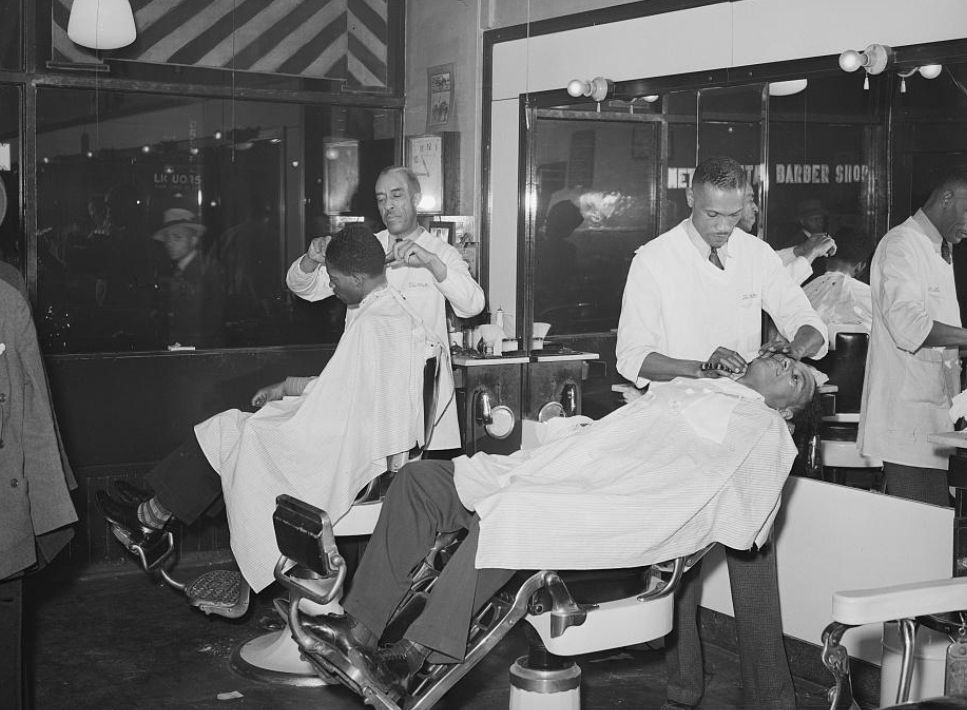
We built because exclusion forced us to build.
That is why the “capitalism is betrayal” line is too small for the history.
Capitalism was not our friend. Capitalism was the battlefield. And Black Americans became globally influential because we fought on that battlefield long enough to understand terrain, timing, spectacle, ownership, distribution, and narrative control.
That’s why Atlanta matters. That’s why Harlem mattered. That’s why Detroit mattered. That’s why New Orleans, Chicago, Houston, Memphis, Oakland, D.C., Philly, Baltimore, and New York mattered. These were not just places where Black people lived. They were production centers. Culture factories. Political laboratories. Style engines. Pressure cookers.

You ever watch somebody make a full meal out of what looked like nothing in the refrigerator? (If not you better learn that sh–t stick, lol) That’s Black America. The empire gave us scraps, surveillance, redlining, bad schools, over-policing, a rigged credit score, and a history book with half the pages missing, and somehow we came out with jazz, hip hop, the civil rights movement, HBCU homecomings, sneaker culture, trap drums, Toni Morrison, Basquiat, Prince, Serena, Baldwin, Beyoncé, Jordan, Obama, Soul Train, and half the internet’s personality.
That is not because oppression is magical. Oppression is not fertilizer. Let’s not romanticize trauma like Tyler Perry and Lena Waithe, lol.
It is because Black people are historically very good at studying systems designed to exclude us, finding the crack in the wall, and turning that crack into a doorway.
Capitalism gave us cracks.
Not justice. Cracks.
And once we got through them, we did what tf Black folks always do. We made a room. Then we made a scene. Then we made a sound. Then we made a market. Then we made everybody watch. Then we made the people who hated us imitate us.
That is power.
Messy power. Compromised power. Incomplete power. But power, none-thef–ckin'-less.
And that is why the celebrity discourse becomes boring when it stays on the surface. Should Killer Mike be criticized? Sure. Should Jay-Z be critiqued? Absolutely. Should we examine whether Black elites sometimes use the language of liberation to justify their own accumulation? Every day and twice on Sunday.
But the critique has to grow up.
Because yelling “capitalist” at every Black person who gets near a deal is not analysis. It is performance anxiety dressed as politics.
The better question is not, “Did he get close to power?”
The better question is, “What did he do with the proximity?”
Did he extract or build? Did he open doors or guard them? Did he redistribute opportunity or just rebrand selfishness as excellence? Did he create institutions or just buy trophies? Did he change the terms, or did he become a better-dressed version of the gatekeeper?
That is the distinction.

I do not need Black rich people to be mascots. I do not need another billionaire giving plantation pods about mindset while regular people are drowning in rent, medical debt, grocery prices, and jobs that want your whole life for $19 an hour. Spare me. I am not impressed by somebody getting rich if the only thing they built is a prettier ladder to nowhere.
At the same time, I also refuse to pretend that Black people rejecting capitalism is a revolutionary strategy.
It really is not.
It is surrender with better vocabulary.
The world runs on ownership, distribution, law, land, finance, media, infrastructure, and violence. That is the actual board. If you are not trying to control pieces of that board, you are not playing a liberation game. You are playing commentary.
This is where Black America’s lesson to the diaspora gets uncomfortable. We did not gain global influence because America was less racist than other places. N–gga Please. America industrialized racism and then gave it a flag, a mortgage product, and a police union.
We gained influence because America’s contradictions created openings. The country claimed democracy, so we forced it to answer for disenfranchisement. It claimed freedom, so we made segregation a global embarrassment. It claimed markets, so we turned culture into value. It claimed merit, so we produced excellence too loud to ignore. It claimed moral leadership, so we put children on the front lines and made the cameras choose.
That is not luck. That is strategy born from survival.
Capitalism did not save Black America. Black America learned how to weaponize capitalism’s insatiable appetite.

The machine wanted profit, so we made ourselves profitable. The machine wanted culture, so we became culture. The machine wanted stars, so we became undeniable. The machine wanted authenticity, so we charged for what it used to steal. The machine wanted cool, so we made cool expensive.
Now everybody wants to act shocked that some Black people want equity after generations of being the raw material.
No.
You do not get to build industries on our backs, our voices, our dances, our pain, our neighborhoods, our slang, our labor, our genius, our dead, our style, and our suffering, and then clutch pearls when somebody says, “Cool. Where’s my percentage?”
That is not greed.
That is invoice language.
Now, does this mean capitalism is the destination? No. Capitalism is a tool. Sometimes a weapon. Sometimes a trap. Sometimes a ladder with blades on every rung. But a tool in the hands of people who understand history is different from a tool in the hands of people who worship money.
That’s the line.
The goal cannot be Black capitalism as decoration. Not “look, we got one too.” Not a Black face on the same extraction machine. Not a billionaire photo op while the neighborhood gets priced into exile. Not “ownership” as a branding exercise while everybody else is still one emergency away from collapse.
The goal has to be institutional power.
Banks. Schools. Farms. Studios. Clinics. Funds. Museums. Publishing houses. Production companies. Grocery systems. Land trusts. Legal networks. Political infrastructure. Technology platforms. Cultural institutions that do not disappear when one charismatic person gets tired, canceled, bought, or buried.
That is the difference between influence and inheritance.

And if we are being honest, a lot of people are more comfortable with Black suffering than Black leverage. They like us prophetic, broke, and morally useful. They like us as symbols. They like us as conscience. They like us singing the hook, marching in the street, dying in the documentary, giving America its redemption arc.
But let a Black person own something?
Now we need a symposium.
Now everybody has concerns.
Now the revolution has a comments section.
That is how you know it is not really about purity. It is about control.
Power wants Black culture close enough to monetize, but not close enough to govern. Close enough to perform, but not close enough to own. Close enough to inspire, but not close enough to decide.
And that is why I am not interested in lazy anti-capitalist theater that cannot explain what comes after the sermon.

If the alternative is collective ownership, say that. If the alternative is cooperative economics, build that. If the alternative is public goods, organize for that. If the alternative is land, capital, and democratic control, then let’s get specific.
But if the alternative is just shaming every Black person who learns how money moves while offering no structure, no institution, no strategy, no distribution, no protection, and no plan beyond “don’t sell out,” then congratulations.
You produced some vibes.
The empire is terrified.
The f–ck?
The truth is simple. Black Americans lead the African diaspora in global influence because we were forced to fight inside the most powerful capitalist system in history, and instead of disappearing, we became one of its main engines.
That does not make capitalism righteous.
It makes our adaptation historic.
So criticize the deals. Question the proximity. Watch the elites. Follow the money. Demand accountability. But stop pretending proximity to capital is automatically betrayal.
The betrayal is getting close to power and bringing nobody with you.
Capitalism did not free us.
We learned how to make the machine pay attention.
That’s the whole game.


Comments